


Price vs Value in Flexible Packaging
Why focusing on unit price alone often increases risk, waste and missed opportunities
In flexible packaging, price is often the first question and sometimes the only one.
“How much does it cost per pouch?”
“What’s the cheapest option?”
“How does it compare to offshore pricing?”
According to BakPac’s Harry Baker, these are understandable questions but they’re also the wrong place to start. (Watch Harry Baker explain price vs value on YouTube)
“If you only look at unit price, you miss the wider commercial picture. Packaging doesn’t exist in isolation. It sits inside your supply chain, your brand strategy, and your ability to respond to the market.”
In an industry under pressure from rising costs, shorter product lifecycles and increasing SKU complexity, the real conversation needs to move beyond price – and towards value.
Price Is Simple. Value Is Contextual.
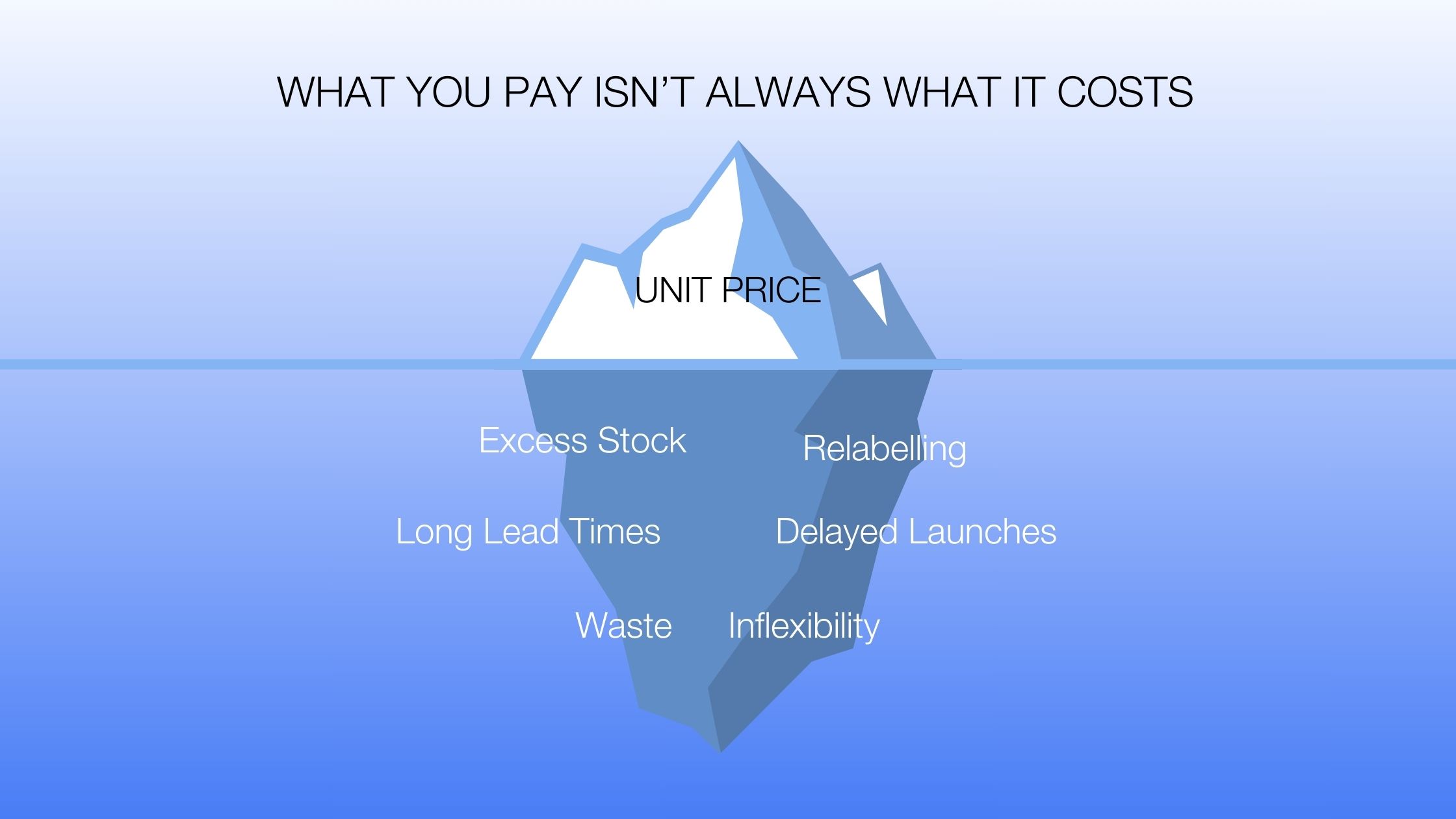
Unit price is easy to measure. Value is harder because it depends on how packaging actually performs in the real world. A pouch that looks cheaper on paper may come with:
• long lead times
• high minimum order quantities
• limited flexibility on artwork changes
• excess stock risk
• slow response when plans change
As Harry explains, these hidden constraints often cost far more than the headline saving.
“Packaging decisions are usually made months before a product hits the shelf. But the market doesn’t wait. If you can’t react, you’re already behind.”
The Hidden Costs Behind “Low-Cost” Flexible Packaging
Traditional flexible packaging models were built for scale. They work well when volumes are predictable and SKUs are stable. But today’s market is different.
Brands are managing:
• wider product ranges
• frequent artwork updates
• seasonal and regional variations
• test-and-learn product launches
Harry regularly sees customers forced into over-ordering just to make production viable.
“You might save a few pence per unit, but you pay for it later – in wasted stock, relabelling, or missed opportunities.”
Over-labelling, in particular, is often treated as a cost-saving shortcut. In reality, it introduces:
• additional labour
• inconsistent branding
• quality risks
• reduced shelf impact
All of which quietly erode brand value.
Agility: The Most Underrated Value in Packaging
One of the strongest themes in Harry’s thinking is agility – the ability to change volume, artwork, or timing without penalty. Digital flexible packaging allows brands to:
• order exactly what they need
• scale volumes up or down quickly
• react to sales data, not forecasts
• avoid committing to packaging before demand is proven
“Being able to order hundreds one week and hundreds of thousands the next isn’t just convenient – it’s commercially powerful.”
This flexibility turns packaging from a constraint into a strategic tool.
Speed to Market Has a Real Commercial Value
In one example Harry discusses, a brand’s overseas packaging supply failed with product already planned for market. BakPac was able to digitally print, laminate and deliver over 250,000 pouches in under a week, keeping the product live and protecting retail listings. The unit price was higher than offshore alternatives but the alternative was far more expensive.
“If your product isn’t on shelf, the unit price doesn’t matter. Availability has a value that rarely shows up on a spreadsheet.”
Speed to market isn’t just about convenience. It protects revenue, relationships, and reputation.
The Value of Partnership in Packaging Decisions
One of the most overlooked contributors to value in flexible packaging is the relationship itself.
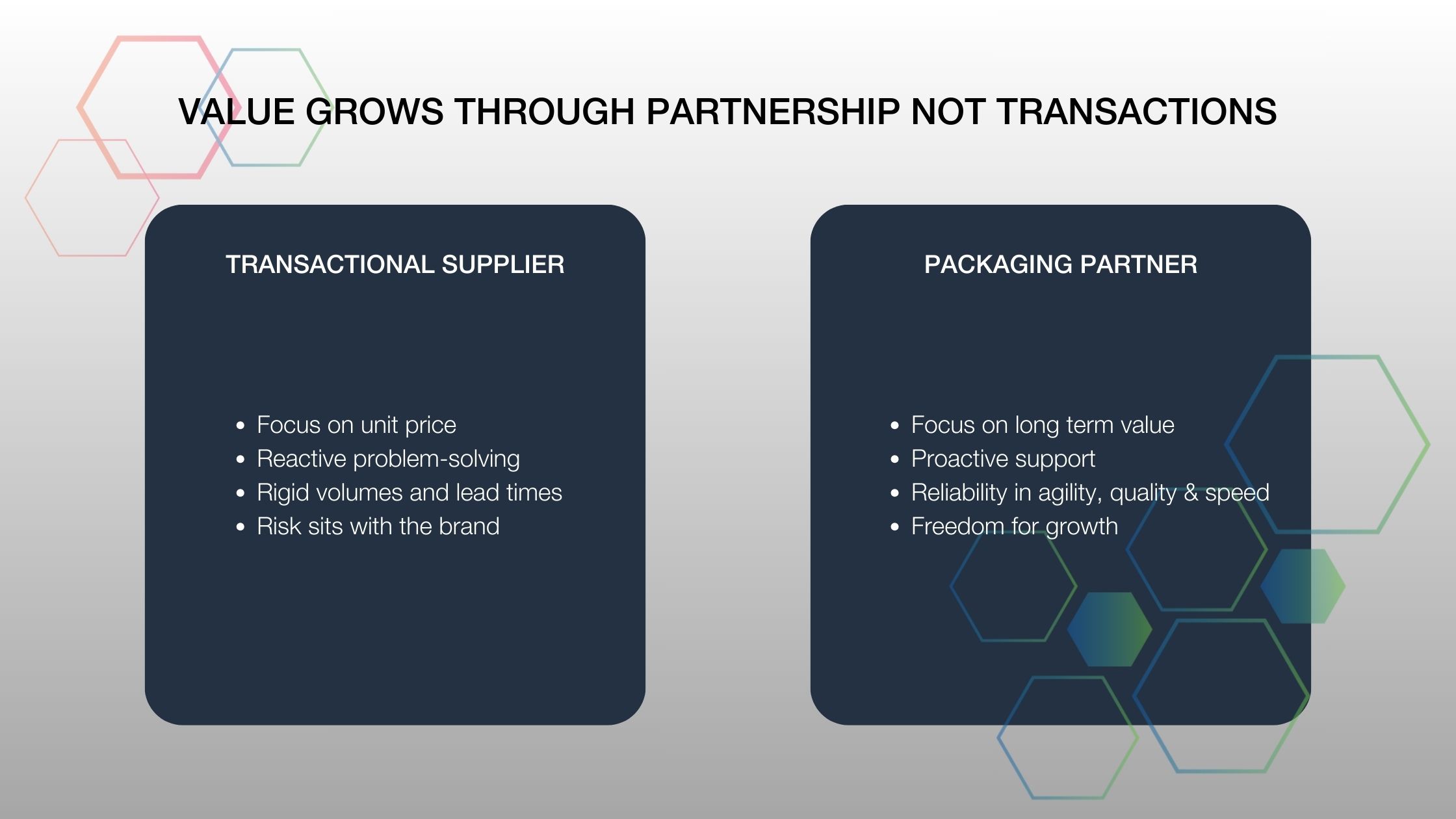
Transactional supplier relationships are usually built around price, volume and delivery. They work… until something changes. And in today’s market, change is constant.
As Harry Baker explains, when a brand chooses a packaging partner, they are not just buying a product. They are choosing how much support, reliability and responsiveness they will have when plans inevitably shift.
“Once a customer chooses to work with us, our responsibility goes beyond price. We partner with them and do everything we can to support their growth.”
A true partnership goes further than fulfilling orders. It means:
- proactive problem-solving rather than reactive firefighting
- reliability across quality, agility and speed to market
For brand owners and the teams behind the scenes, this reliability creates headspace. It allows them to focus on launching, innovating and growing their brand, rather than managing packaging risk.
This is where value compounds over time. Not through a single transaction, but through an ongoing relationship that supports consistency, confidence and growth.
Waste Is a Cost – Even If It’s Not on the Invoice
Excess packaging stock is one of the most overlooked costs in flexible packaging.
Changes in:
• formulations
• legislation
• branding
• barcodes
• sustainability claims
can render packaging obsolete overnight.
Digital production reduces this risk by allowing brands to order closer to demand.
“Even large brands are questioning why they should risk tens of thousands of unused packs when success isn’t guaranteed.”
Reducing waste isn’t just environmentally responsible – it’s commercially smart.
Reframing the Price vs Value Conversation
At BakPac, Harry encourages customers to change the question entirely.
Instead of:
“What’s the cheapest pouch?”
Ask:
“What packaging model best supports our growth, reduces risk, and allows us to respond to reality?”
When you consider:
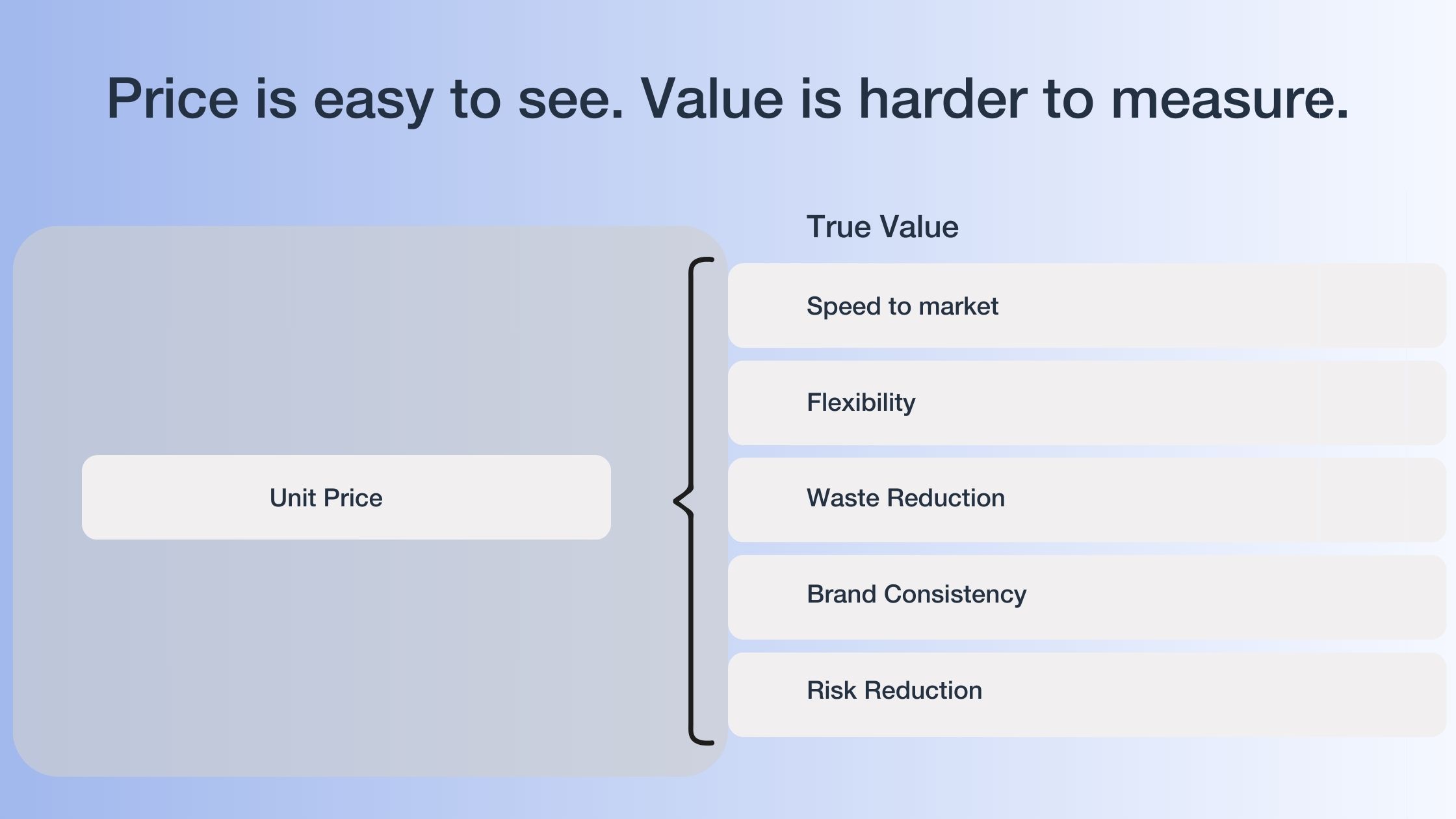
• speed to market
• stock efficiency
• brand consistency
• flexibility
• supply chain resilience
the true cost of flexible packaging looks very different.
And often, the option with the higher unit price delivers far greater long-term value.
Final Thought
Packaging decisions shape how brands grow, but the real difference often comes down to partnership.
When packaging is treated as a transactional purchase, teams absorb the risk when plans change. When it’s treated as a partnership, reliability, agility and quality become shared responsibilities.
That shared responsibility creates freedom: freedom to launch faster, adapt with confidence and focus on building the brand rather than managing constraints.
Or, as Harry puts it:
“Value isn’t what you pay for packaging – it’s what packaging enables you to do.”
Continue the Conversation?
If you’d like to explore how a more flexible packaging model could support your brand, we’d be happy to talk. Rethink your packaging strategy…
The Total Cost of Flexible Packaging
Moving Beyond Unit Price to Make Better Packaging Decisions